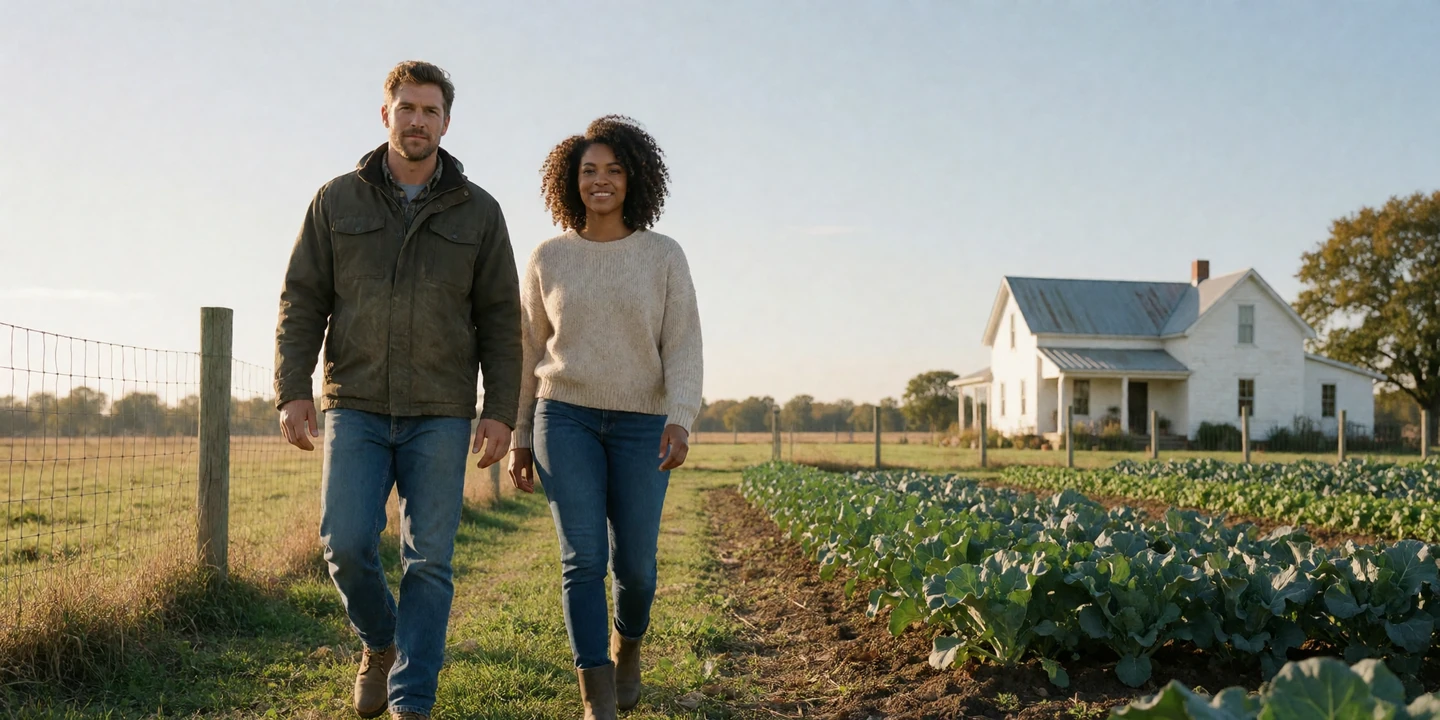
Adult farm couple walking toward a farmhouse, showing life on a farm and relationships

Life on a Farm: Relationships and Realities

Life on a farm and relationships are closely tied together: the work, the land, the family table, and the future all influence how a farm couple builds trust, handles stress, and keeps love steady through every season.

Quick Summary

  • Farm relationships work best when both partners respect the daily rhythm of chores, weather, livestock, and seasonal pressure.
  • Shared work can strengthen a couple, but it needs clear roles, rest, and honest conversations about expectations.
  • Raising children in rural areas often offers responsibility and closeness to nature, while requiring planning around distance, schools, and social life.
  • Money conversations matter because farm income can be seasonal, equipment costs can be high, and family land decisions can be emotional.
  • Romance survives when couples protect small rituals: porch coffee, field lunches, evening walks, and winter planning time.

The Daily Rhythm of Farm Life

The daily rhythm of farm life is built around responsibility before convenience. Animals, crops, machinery, and weather create a schedule that affects every date night, family meal, and long-term plan. For anyone hoping to marry a farmer, understanding that rhythm is not a small detail - it is the structure of the relationship.

Here is where it gets interesting: the same schedule that can feel demanding also creates deep loyalty. A farmer who wakes before sunrise, checks the barn before breakfast, and finishes the last chore after dark is practicing commitment every day. In a healthy relationship, that commitment expands beyond the farm and becomes part of how the couple cares for each other.

Niche dating services for rural people grew because many singles felt mainstream apps did not understand this lifestyle. FarmersOnly, founded in 2005 for farmers, ranchers, and other country-minded singles in the United States and Canada, became known for the simple idea that rural people often want someone who understands grounded values and country life. Farmers Match follows that same practical lesson: shared lifestyle context matters when your days are shaped by land, distance, and work.

A farm couple does not simply share weekends. They share weather reports, chore lists, family expectations, and the quiet satisfaction of work done well.

What does this mean in practice? It means the strongest rural relationships are built with realistic expectations. A late reply during harvest is not neglect. A postponed dinner because a calf is sick is not lack of interest. The work is real, and so is the affection. If you are still learning the lifestyle, start with our guide on how to date a farmer.
Working Together on the Farm

Working together on the farm can strengthen a relationship when the couple treats labor as partnership, not proof of worth. Shared chores reveal patience, communication, and problem-solving. The key is to divide work with respect rather than assuming one person should automatically fit into another person's routine.

Some couples enjoy doing everything side by side: feeding animals, tending a garden, repairing fences, and planning the season. Others work best with separate lanes. One partner may handle livestock while the other manages books, meals, errands, marketing, or off-farm income. Both arrangements can be healthy when the couple recognizes every contribution as valuable.

The bottom line: Shared work should create belonging, not resentment. Talk about roles before the busy season, and revisit them when the workload changes.

There is also a romantic side to shared work. A packed lunch in the field, a laugh over muddy boots, or a quiet ride back from checking fences can become the everyday glue of a country relationship. Homestead dating is often less about polished outings and more about whether two people enjoy solving ordinary problems together.

Raising Children in Rural Areas

Raising children in rural areas can offer space, responsibility, and a close relationship with nature. Children may learn where food comes from, how seasons change work, and why family cooperation matters. The trade-off is that parents must plan more carefully around distance, childcare, school activities, and social opportunities.

Many farm families value the practical education children receive outside the classroom. Feeding animals, planting a garden, helping at a farmers market, or watching a parent fix a machine can teach patience and confidence. Children often see adults working with purpose, and that can shape how they understand responsibility.

But there is a catch: rural parenting can be isolating if adults do not protect community connections. Sports, church life, county fairs, 4-H-style activities, extended family, and neighbor relationships often become important anchors. A couple considering marriage on a farm should discuss how they want to raise children before the pressure of daily life makes decisions for them.

  1. Talk about safety. Farms are beautiful, but equipment, animals, water, and chemicals require clear boundaries for children.
  2. Plan transportation. Long drives to school, doctors, and activities affect time, fuel, and family energy.
  3. Protect childhood. Helping with chores can be healthy, but children still need rest, play, friendships, and time to be young.

Financial Aspects of Farming Relationships

Financial aspects of farming relationships are different because income and expenses often follow seasons instead of steady monthly patterns. A farm couple may manage equipment repairs, seed costs, livestock care, land leases, insurance, taxes, and household bills at the same time. Love helps, but clear financial communication protects the relationship.

Money conversations can feel personal on a farm because finances are often tied to family land and generational decisions. A tractor is not just a purchase; it may determine whether the season runs smoothly. A barn repair is not just a bill; it may protect livestock or future income. For a partner marrying into farm life, learning the reason behind expenses can reduce tension.

Consider this: many successful farm couples treat money meetings as relationship maintenance. They set aside time to review upcoming costs, talk through debt carefully, and decide which dreams can wait. That does not remove uncertainty, but it keeps both partners on the same side of the problem.

Helpful money conversations before marriage

  • How seasonal income affects household budgeting and date planning.
  • What role off-farm income, savings, or side businesses may play.
  • How decisions about inherited land, family expectations, and future children will be handled.
  • Which farm expenses are urgent and which can wait without hurting the operation.

Balancing Work and Romance

Balancing work and romance on a farm requires intentional small rituals because free time is rarely abundant. A farm couple may not always have long weekends away, but they can still create connection through daily habits that say, “You matter even when life is busy.”

The real question is not whether farm life leaves room for romance. It does. The question is whether both people are willing to protect it. A hand on the shoulder during chores, coffee before the first round of work, a five-minute call from the tractor, or an evening walk down the lane can carry real emotional weight.

For long-distance rural couples, balance also includes planning visits around planting, harvest, and livestock needs. If that sounds familiar, our article on rural long-distance relationships offers practical ways to stay connected across miles. If you are looking for low-pressure ways to reconnect close to home, explore these country date ideas.

In the end, life on a farm and relationships both ask for the same qualities: patience, honesty, endurance, humor, and a willingness to show up when the day is not easy. That is why rural love can feel so steady when the match is right.

Real Farm Couple Stories

Farm couple stories often center on practical love: shared chores, patient timing, and choosing each other again after a hard day. These illustrative stories reflect common rural relationship themes.

Adult farm couple drinking coffee on a pickup tailgate in a cornfield setting

“Our best dates were not fancy. They were tailgate coffee after chores and honest talks about what kind of home we wanted to build.”

Megan & Cole Central Iowa
Adult rural couple repairing a wooden pasture fence together on a farm

“Fixing fence together taught us how we handle pressure. We learned to slow down, listen, and solve the problem before blaming each other.”

Tasha & Grant East Tennessee

For more rural relationship inspiration, visit our country success stories or browse local farmers dating by state.

Build Your Farm Life Together

Meet farmers, ranchers, homesteaders, and rural singles who understand shared work, family values, and the steady realities of country relationships.

Free to join. Reviewed profiles. A calm way to meet people who respect the rural way of life.